Keeping pet gear clean without ruining it

Most pet equipment is thrown away long before it wears out, because it has been washed in a way that destroys it or not washed in a way that lets it become unpleasant. Neither is necessary, and the routines involved are short.
Fleece blankets: cool wash, no softener
Fleece is a synthetic pile and heat is what flattens it. A cool or warm wash keeps it soft for years; a hot one mats the fibres permanently after a few cycles, which is why blankets go stiff and scratchy.
Fabric softener is the other culprit. It coats the fibres, reduces absorbency and traps odour rather than removing it. Plain detergent, and a little white vinegar in the rinse if you want the smell gone.
Get the hair off before it goes in
Washing a hair-covered blanket redistributes the hair through the machine and back onto everything else in the load. A minute with a rubber glove or a lint brush beforehand removes most of it.
Running a rinse-only cycle with nothing in the machine afterwards clears what did come off. This is the step that keeps pet washing from contaminating household laundry.
Drying matters more than washing
Fleece should be air dried or tumbled on low. High heat is what causes the pilling and the permanent flattening, more so than the wash itself. A blanket that comes out of a hot dryer feels different immediately.
Thick blankets take a long time to air dry and must be fully dry before being put back down, or they develop a mildew smell within a day. Hanging them over two lines rather than one roughly halves the time.
Silicone mats: soap and a soft cloth
Silicone is easy: warm soapy water and a cloth, or the top rack of a dishwasher if the listing says dishwasher-safe. What it does not tolerate is abrasive scourers, which scratch the surface and give food somewhere to lodge.
The slight cloudiness silicone develops over time is normal surface wear and does not affect it. It is not a hygiene problem and it cannot be scrubbed off.
Stainless bowls need a brush, not a rinse
Water bowls form a biofilm — the slightly slippery layer — within a day or two, and rinsing does not remove it. It needs mechanical action: a brush, a scourer, or a dishwasher cycle. Daily for water, after every meal for food.
Stainless steel is dishwasher-safe without qualification, which makes this the easiest item in the house to keep genuinely clean. There is no reason for a steel bowl ever to be neglected.
Elevated stands and mixed materials
The bowls come out; the stand does not go in the dishwasher. Wooden and fabric-covered stands need wiping only, and standing water underneath them is the thing to check for, because it is out of sight.
Lift the bowls out weekly and dry the recesses. This is the part of an elevated feeder that gets missed and the part that causes problems.
How often is actually necessary
Water bowls daily, food bowls after each meal, mats weekly or when visibly soiled, blankets weekly to fortnightly depending on the animal. Beds monthly unless something happens to them.
This is less onerous than it reads because most of it is thirty seconds. The items that need real time are the blankets, and those are the ones you can own several of.
Owning enough to rotate
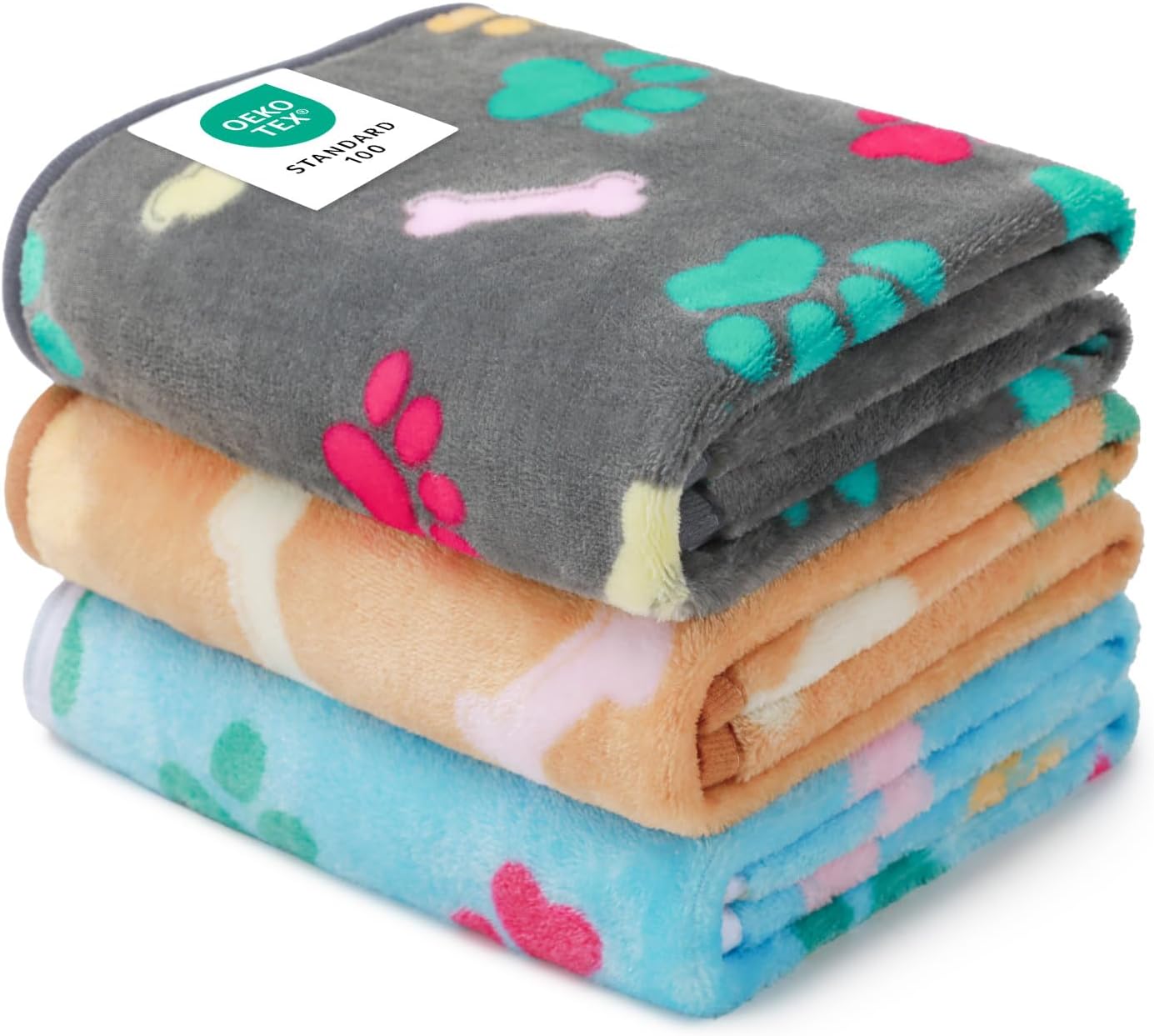
One blanket means the sofa is unprotected on wash day, which is why blankets get put back damp. Three-packs exist for this reason and they are the single most practical multipack in the category.
The same logic applies to mats in a two-animal household. Rotation is what makes a cleaning routine survive a busy week.
When to replace rather than clean
Fleece that has gone permanently stiff, silicone that has torn, and any bowl with a scratched or chipped surface are past the point where cleaning helps. Scratched surfaces in particular hold residue no wash removes.
Stainless steel effectively does not reach this point, which is most of the argument for buying it in the first place. A steel bowl that looks tired usually just needs a dishwasher cycle rather than replacing.
Dealing with the smell rather than covering it
Odour in pet textiles is bacterial and it lives in the fibres, so scented detergent and softener make it worse by adding a layer over the top. What actually removes it is a longer wash at a moderate temperature with plain detergent, and white vinegar in the rinse compartment.
If a blanket still smells after drying, it was not fully dry when it was put away. Damp fleece develops a mildew note within a day, and no amount of rewashing fixes it if the drying step is the problem.
Washing keepsakes and anything engraved
Engraved stainless bowls and tags go in the dishwasher without any special handling — laser engraving is cut into the metal rather than printed on it, so there is nothing to wear off. Plated or coated tags are the exception and should be wiped by hand.
Nothing containing a photograph, a printed insert or an adhesive backing should go anywhere near water. Frames, photo urns and shadow boxes are dusted, not cleaned, and a dry soft brush is the whole of the maintenance they need.
Blankets, mats and bowls
See everything in Dog Beds & Blankets.
A workable routine
Cool wash and low heat for fleece with no softener, de-hair before washing, brush bowls daily rather than rinsing them, wipe silicone with a soft cloth, and own enough blankets to rotate. That is the whole routine.
Questions about anything above? Our FAQ covers the usual ones, the Shipping Policy has the delivery detail, and you can contact us directly — we answer within one business day.